- Circular Rising
- Posts
- Africa’s circular economy push targets SMEs
Africa’s circular economy push targets SMEs
Source: ABSA Kenya
From the newsletter
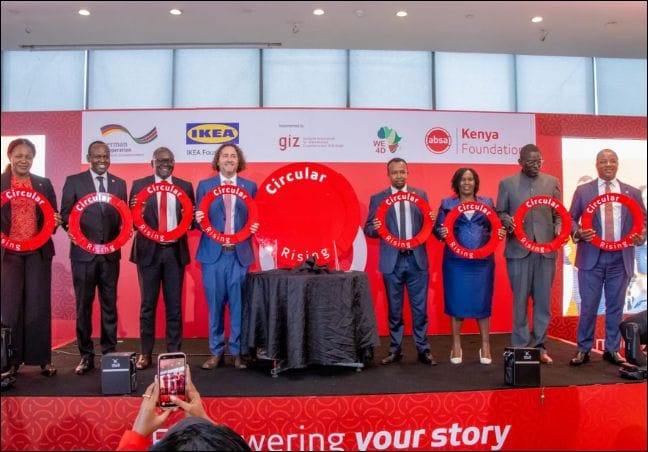
Over the past five months, Circular Rising has tracked growing momentum around financing and enterprise support for SMEs in Africa’s circular economy. Most recently, KCB Foundation launched an EU-funded initiative supporting MSMEs adopting circular business models, weeks after Absa Foundation unveiled a separate programme targeting Kenyan circular economy businesses.
Africa’s circular economy ecosystem remains largely early-stage, with many enterprises still operating at small scale.
While many circular economy SMEs have viable business models, limited financing, technical capacity and investment readiness continue to restrict their ability to scale and access institutional capital.
More details
Dubbed “Tujenge Pamoja” (“Let’s Build Together”), the EU-funded initiative in Kenya seeks to support 3,200 MSMEs adopting circular business models centred on repair, reuse and recycling. Meanwhile, the Absa Foundation CirculaRising Programme targets more than 2,000 women- and youth-led MSMEs through financing, technical assistance and market access interventions aimed at scaling circular enterprises. This comes as policymakers and industry stakeholders in the country introduced a policy brief examining barriers limiting SME participation in the circular economy, including financing gaps, technology access and regulatory compliance challenges.
Beyond East Africa, Tunisia recently launched the MAIR programme targeting Greentech startups and SMEs operating in sectors linked to the green transition, including waste management, with a focus on commercialisation and industrial scale-up. Meanwhile, the UNDP Rome Centre and Africa Sustainable Finance Hub have expanded investment-readiness support for climate-focused SMEs across six African countries.
The growing focus on SMEs reflects the structure of Africa’s circular economy itself, where much of the continent’s waste recovery, recycling, repair and reuse systems are already driven by smaller operators. Unlike highly industrialised economies where circular systems are often led by large corporations, Africa’s circular economy is emerging through fragmented but adaptable SME ecosystems operating close to waste streams, consumers and local supply chains.
These developments indicate the continent’s circular conversation is gradually shifting from policy frameworks and sustainability commitments toward implementation through financing and enterprise support mechanisms. The emergence of guarantees, blended finance vehicles, accelerators and investment-readiness programmes reflects a growing recognition of circularity as an investable economic sector rather than solely an environmental agenda.
As reflected in the recent Kenyan initiatives, financial institutions are beginning to explore circular SMEs as potential growth segments, particularly in waste management, sustainable manufacturing and green services. However, much of the activity still relies on donor-backed partnerships and guarantee structures designed to reduce lending risks.
Despite growing investor interest, many SMEs still struggle with informality, weak financial records, limited collateral and regulatory compliance requirements that restrict access to institutional capital. As a result, technical assistance, business development support and investment-readiness programmes are increasingly being positioned alongside financing as critical tools for scaling circular enterprises.
Our take
The growing focus on SME financing could contribute to the gradual formalisation of Africa’s circular economy. As smaller operators gain access to structured financing, compliance systems and market support, informal waste recovery and recycling activities may increasingly integrate into regulated value chains.
However, the pace of formalisation may remain uneven given the scale of informality and the limited capacity of many municipalities and financial institutions to absorb smaller operators into regulated systems.