- Circular Rising
- Posts
- Wastewater could become a new feedstock for green fuels
Wastewater could become a new feedstock for green fuels
Source: Continent Rising
From the newsletter
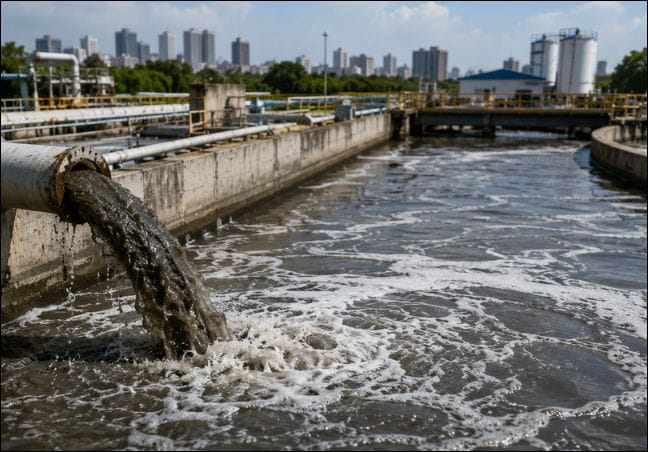
Africa’s wastewater could soon play a growing role in industrial decarbonisation. Blended finance facility Climate Fund Managers is investing $4 million in a South African wastewater-to-methanol project expected to produce 14,300 tonnes of green methanol by 2029 while processing an estimated 90,000 tonnes of sewage sludge each year.
Africa generates an estimated 125 million tonnes of municipal solid waste annually, much of which remains poorly managed, while rapid urbanisation continues to strain wastewater and sludge treatment infrastructure.
As African countries pursue industrial decarbonisation, wastewater and sewage sludge are increasingly being viewed not only as environmental liabilities, but also as potential feedstocks for low-carbon fuels and circular industrial systems
More details
Developed by Green eFuels Producers as part of its planned Green Methanol Corridor strategy, the Gauteng project will convert sewage sludge from the Sebokeng Wastewater Treatment Works into green methanol using renewable energy and green hydrogen. The facility will combine a 10 MW electrolyser with around 50 MW of co-located solar capacity alongside additional wind power sourced through South Africa’s wheeling framework.
The project reflects a broader shift in how African wastewater systems are being viewed, not simply as sanitation infrastructure, but as potential sources of industrial feedstocks, recoverable resources and low-carbon energy. In much of Africa, wastewater sludge remains underutilised, with disposal-focused systems still dominating municipal treatment approaches despite rising urban waste volumes and mounting pressure on ageing infrastructure. As African cities expand, municipalities are also facing growing sludge disposal costs and increasing pressure to modernise wastewater treatment systems.
The development also reflects evolving efforts to localise Africa’s emerging green hydrogen economy. Much of the continent’s hydrogen pipeline has so far centred on export-oriented ammonia projects targeting European and Asian markets. But wastewater-derived methanol suggests circular waste streams could support more integrated domestic industrial models, raising broader questions about whether Africa’s energy transition can evolve beyond raw material and molecule exports toward downstream fuel production and local value creation.
The commercial viability of such models is becoming increasingly relevant as global demand for alternative fuels accelerates. Green methanol is attracting growing interest from sectors such as shipping, aviation and heavy industry, where direct electrification remains difficult. Rising pressure on the global shipping industry to reduce emissions is accelerating investment into lower-carbon marine fuels, including green methanol. This could create opportunities for African cities to reposition waste streams as economic assets. It could also help attract climate and infrastructure finance into municipal systems traditionally viewed as cost centres.
As Africa’s circular economy evolves, blended finance players such as Climate Fund Managers are likely to play an increasingly important role in enabling circular industrial infrastructure. Projects combining waste management, renewable energy and low-carbon fuel production often face high upfront capital costs, long development timelines and uncertain commercial returns, making them difficult to finance through conventional lending alone. As a result, blended finance mechanisms are increasingly being used to absorb early-stage risk and attract private capital into emerging circular economy sectors tied to industrial decarbonisation.
Beyond financing, attention is also shifting toward whether wastewater-to-fuel infrastructure can scale across African cities and industrial corridors. Large metropolitan and port-linked economies such as Johannesburg, Cairo, Casablanca, Lagos and Nairobi could over time emerge as potential candidates due to their wastewater volumes, industrial activity and renewable energy potential. However, limited treatment capacity, fragmented municipal systems, financing constraints and the high capital requirements associated with green fuel infrastructure remain significant barriers to wider deployment.
Our take
If replicated successfully, circular fuel projects could strengthen arguments for integrating waste infrastructure into national industrial and energy transition strategies rather than treating sanitation solely as a public service issue.
Wastewater-linked fuel systems could eventually reshape how African cities value sanitation infrastructure, transforming treatment plants from cost-heavy utilities into platforms for resource recovery, energy production and industrial feedstock generation.