- Circular Rising
- Posts
- An untapped market in Africa’s organic waste stream
An untapped market in Africa’s organic waste stream
Source: Continent Rising
From the newsletter
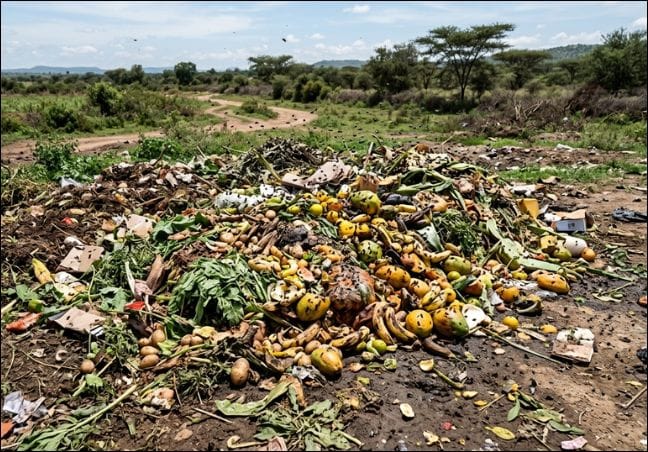
A new report by the World Bank shows that organic waste makes up roughly 50% of Africa’s municipal streams. Yet, despite this large share, it remains one of the continent’s most underutilised resources, often uncollected or mixed with other waste streams leading to lost value, rising emissions and missed opportunities for recovery.
Organic waste is a viable feedstock for a range of commercial products, a shift being driven by rising demand for local agricultural inputs and more stable, decentralised energy solutions.
While diverse recovery pathways exist, decentralised solutions are better aligned with local conditions and more likely to scale than centralised, capital-intensive systems.
More details
A key opportunity for Africa’s organic waste lies in nutrient recovery and soil regeneration. With soil degradation and rising fertiliser costs constraining agricultural productivity, converting organic waste into compost or biofertilisers offers a commercially viable, locally sourced alternative to imported inputs. This not only improves soil health and crop yields, but also creates a domestic input market less exposed to global price volatility. Revenues are typically driven by sales to farmers, agribusinesses and government-supported agricultural programmes, particularly where input substitution reduces costs. Pilot projects across East and West Africa show that decentralised composting can deliver both agronomic and economic returns, though scale remains limited.
Energy recovery presents a second pathway, but with diverging models. Large-scale waste-to-energy projects, such as the Reppie plant in Ethiopia and the Divo biomass project in Côte d’Ivoire, demonstrate the potential to generate electricity from waste, but their viability remains constrained by high capital costs and the low calorific value of organic-heavy waste streams. In contrast, decentralised solutions, including biogas systems and fuel briquettes, are gaining traction as more adaptable, lower-cost alternatives. These models typically generate revenue through energy sales to households and businesses, as well as cost savings where they displace more expensive or unreliable fuel sources.
Beyond agriculture and energy, organic waste is also emerging as a feedstock for a range of industrial and commercial applications. These include animal feed through bioconversion processes, as well as bio-based materials and inputs for manufacturing. While still nascent, such applications point to higher-value opportunities as technologies mature and supply chains develop, particularly in markets seeking to localise production and reduce import dependence. These segments may offer higher margins over time, but will likely require more structured supply chains and consistent feedstock to scale.
However, realising these opportunities will depend on overcoming structural constraints. Africa’s organic waste stream is typically mixed, contaminated and high in moisture, characteristics that limit processing efficiency and reduce the performance of certain technologies, particularly centralised waste-to-energy systems. Limited collection coverage and weak source separation mean much of this waste never reaches formal recovery pathways.
Investment and infrastructure gaps further constrain progress. Many municipalities lack the equipment, facilities and financing required to support composting, anaerobic digestion and other recovery systems at scale. While private players could help bridge this gap, policy fragmentation remains a key barrier, with limited regulatory clarity and few incentives to support organic waste recovery as a distinct segment. Data gaps on waste flows and composition make it even harder to prioritise investments and measure outcomes. As a result, disposal-focused systems remain dominant, diverting organic waste away from productive use.
Our take
Africa’s organic waste opportunity faces a classic chicken-and-egg problem: markets for organic end-products cannot grow without reliable recovery systems, yet those systems struggle to develop without market demand. Breaking this cycle may require anchor buyers, policy mandates or blended finance mechanisms to simultaneously support supply and demand.
This raises the question of who will ultimately lead the market, whether waste firms controlling supply, or downstream industries shaping demand and value chains.