- Circular Rising
- Posts
- Averda’s growth strategy puts client experience at the forefront
Averda’s growth strategy puts client experience at the forefront
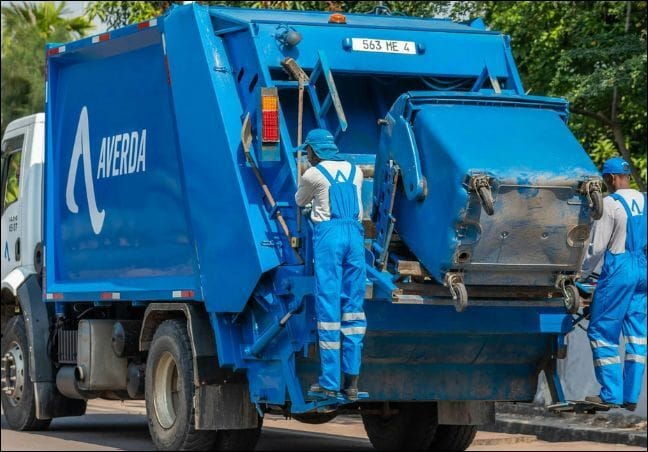
Source: Averda
From the newsletter
Pan-African waste management company Averda is rapidly expanding its client-facing teams, signalling a strategic pivot from purely operational growth. LinkedIn data shows customer success and support roles grew by 26% over the past year, highlighting the company’s emphasis on service quality and client engagement.
This emphasis is reinforced by growth in information technology and business development roles, which increased by 13% and 10% respectively, an expansion that enables Averda to combine frontline service with digital tools and sales capacity.
Stability in these functions further supports this approach, with information technology and business development recording the lowest attrition rates at 2% and 5% respectively.
More details
Averda’s client-first approach is mirrored in its workforce growth, which rose 7% over the past year with 85 new positions added, reaching 732 employees. Nearly a third of all new hires were added to customer success and support, showing that for every three new employees, at least one was dedicated to enhancing service quality and client engagement.
The strengthening of client experience is supported by a robust frontline leadership structure. Employees with the titles “team lead” and “supervisor” recorded the highest growth, increasing 33% and 17% respectively. While these management roles scale, operations remains the largest function at 40% of the workforce, with a low 3% attrition rate providing a reliable foundation for the newer client-facing teams.
To strengthen service delivery, Averda is also investing in specialised expertise in sustainability and compliance. The fastest-growing skills among employees include environmental management systems (+12%), environmental compliance (+11%) and recycling (+11%). Meanwhile, 14% of staff hold associate-level qualifications, well above the 4% industry average. This combination reflects a deliberate emphasis on applied skills that enhance operational delivery and client service.
Workforce experience further reinforces reliability, with more than half of employees bringing over six years of professional experience, concentrated in the 6–10 year and 10+ year bands. Stability is strongest in operationally adjacent and control functions such as accounting (9.3 years), HR (8.7 years) and quality assurance (8.6 years), supporting smooth service delivery and allowing client-facing teams to focus on engagement and performance.
To fuel this specialized expertise, Averda is increasingly diversifying its talent pool, drawing professionals from high-scale service and industrial sectors. While it continues to trade talent with direct peers like SUEZ, it has seen a notable net influx of talent from DHL, PwC, and Standard Bank Group. This move indicates that as Averda moves toward a client-first model, it is actively headhunting from logistics and professional services firms that define the high-touch account management.
The talent influx is being channeled directly into Averda’s three core markets, which now house 96% of the workforce. Congo Brazzaville led growth at 9%, followed by Morocco at 8% and South Africa at 5%. By focusing headcount in these hubs, Averda ensures that client-facing resources are positioned directly where project demand is highest.
Our take
By deploying nearly a third of all new hires into customer success, Averda is signalling a shift from a volume-driven waste collector toward a service-led operating model, where client engagement is key.
While focusing on enhanced service delivery gives Averda a competitive edge, it also increases dependence on a mobile corporate-tier talent pool. Sustaining growth in support functions particularly amid high turnover in peripheral roles like legal and finance will require careful balance to ensure that the corporate expertise stays connected to the realities of frontline waste operations.
With 96% of its workforce concentrated in just three African hubs, Averda remains exposed to regional economic or regulatory shifts, which could disrupt operations and service delivery.