- Circular Rising
- Posts
- Europe-backed financing accelerates circular economy
Europe-backed financing accelerates circular economy
Dear subscriber,
The less we see of America when it comes to the green economy, the more some Europeans seem to step in. One can only hope that trend holds.
Mercy Maina – Editor
 | European institutions are increasingly backing African initiatives that embed circular economy principles. The latest example is a concessional financing and grant worth $67 million, signed by the European Investment Bank, French Development Agency and the European Union, to support Egypt’s Green Sustainable Industries (GSI) Program. |
The GSI Program is a $314.4 million Europe-backed initiative supporting Egypt’s industrial transition to a green economy through decarbonisation, energy and resource efficiency and circular economy practices.
The Europe-backed investment in Egypt aligns with a growing trend of European support for circular economy initiatives across Africa, combining grants, concessional financing and technical assistance to promote sustainable industrial practices.
Our take: African governments must implement clear policies to ensure these investments translate into real, sustainable circular economy outcomes… Read more (2 min)
 | While plastic seems convenient, its true cost falls disproportionately on low- and middle-income regions, says Valentine Onditi. He notes that developed nations reap production benefits, while communities in Africa bear the brunt of environmental, health and economic costs from waste they contribute little to producing. |
Mr Onditi is a circular economy advocate and Head of Marketing at Jirani Recyclers Kenya, a waste management company that transforms polythene bags into meaningful products.
He argues that addressing plastic pollution requires more than recycling: It demands systemic change through circular economy practices, equitable responsibility, and global cooperation to ensure the hidden costs of plastic are shared fairly.
Read the full opinion article here (2 min)
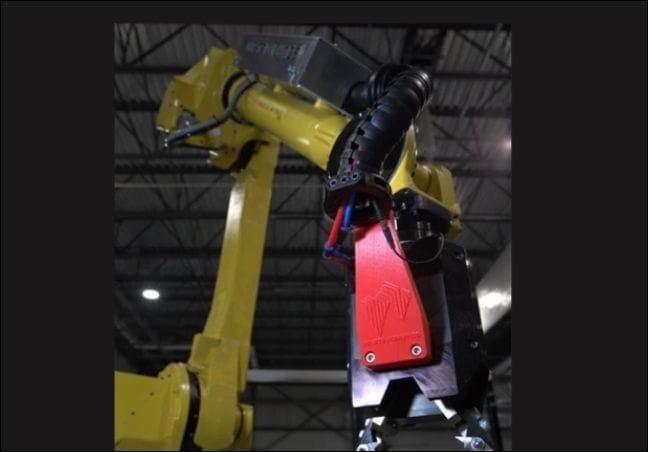 | Since September, several innovations have emerged seeking to advance the circular economy. Circular Rising highlights four that stand out for their anticipated impact. They include artificial intelligence-driven waste sorting technologies and an innovation that turns dirty plastic film into reusable material for making new products or for recycling. |
Two of the AI technologies have been developed by researchers at Indian and American institutions, while the third is a commercially available system that uses AI-driven robotic arms to recover metals from mixed waste.
These technologies aim to improve efficiency in waste sorting, reduce contamination, and support more sustainable recycling in urban and industrial settings.
Our take: For Africa, these innovations could improve waste sorting but adoption may be constrained by infrastructure gaps and high implementation costs…Read more (2 min)
___________________


Source: Government of Ethiopia
Reppie waste-to-energy plant in Ethiopia
Events
🗓️ Register for the Artistic Pulse Festival in Nigeria (December 3)
🗓️ Network at the UN Environment Assembly (UNEA-7) in Nairobi (December 8)
Jobs
🧑⚕️ Work as a Legal Assistant at Regen Organics (Kenya)
🧑⚕️ Be a Senior Regional Technical Specialist at IFAD (Kenya)
🧑⚕️ Serve as an Environmental Assistant at Danish Refugee Council (Uganda)
🧑⚕️ Oversee advisory services for recycling project at Technoserve (Nigeria)
Various
⛔ Reppie WTE facility fails to meet its economic and environmental commitments
❌ Kenya to phase out single-use plastics in tourism
👮 NEMA begins public consultations on new e-waste regulations
🗑️ The hidden cost of waste in the office
🛍️ Plastic bags sneak back to Kenyan markets as ban silently loses its bite
☣️ Global hazardous waste management market to hit $28.6 billion by 2032
Seen on LinkedIn
Eng. Simon Bere, an integrated solid waste management consultant, says, “Zimbabwe’s and Africa's waste crisis will not be solved just by buying more compactors and building bigger landfills! The solution is understanding and implementing Integrated Solid Waste Management (ISWM) — the science, the systems, the planning, and the leadership needed to run a modern urban solid waste management system.”