- Circular Rising
- Posts
- Inside Africa’s emerging demand-led recycling model
Inside Africa’s emerging demand-led recycling model
Source: Continent Rising
From the newsletter
Africa’s recycling sector has long been shaped by the availability of waste rather than the certainty of demand for it. That is beginning to change. In Nigeria, three industry players (Indorama Ventures, Nigerian Breweries and Genesis Energy) have partnered to establish one of Africa’s largest recycled PET facilities, signalling a shift towards demand-led recycling.
Recycled content from fast-moving consumer goods companies and the demand for it is reshaping circular economics, shifting the sector from speculative models towards more predictable, market-driven investment.
As a result, recycling is likely to become more structured and controlled, with companies adopting a value chain approach to reduce volatility and improve supply reliability.
More details
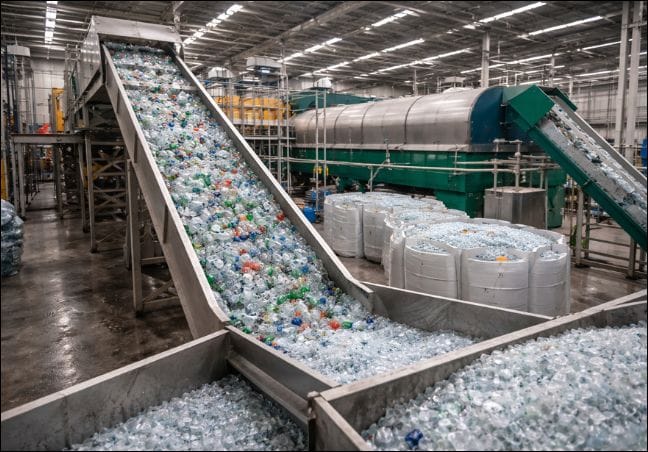
To be based in Lagos, the rPET facility will convert used PET bottles into high-quality recycled materials, with an annual capacity of 45,000 tonnes of food-grade rPET resin. The project, set to become operational in the first half of 2027, brings together three companies with complementary strengths. Indorama Ventures, the world’s largest producer of PET resins, contributes technical expertise, while Nigerian Breweries provides local market insight. Genesis Energy will support the project with sustainable infrastructure and energy solutions.
In Nigeria, the venture may stand out for its scale and partnerships, but across Africa it signals something bigger. It points to a shift in how recycling projects are being conceived and financed, with implications that extend beyond a single market. Traditionally, Africa’s recycling sector has been dominated by startups seeking to tap into readily available waste and convert it into value. In many cases, however, this waste-led model carries a high risk profile. It depends on markets that may not yet exist or take time to develop, making revenue streams uncertain and scale difficult to achieve. This helps explain why many ventures struggle to move beyond the pilot stage.
In contrast, an emerging demand-led recycling model is anchored in existing end markets. Projects such as the rPET initiative in Nigeria are built around clear demand for recycled content, particularly in packaging. Beverage producers already require these inputs, meaning the plant is being developed against a known market rather than a hoped-for one. This lowers risk, improves bankability and offers a more direct path to scale. It is also reshaping how recycling businesses are structured, with companies moving towards more vertically integrated models by securing feedstock, investing in processing capacity and linking output directly to end use within more controlled value chains.
Evidence of this model is already visible across the continent. In Kenya, Mr. Green Africa has built its model around supplying recycled plastics to manufacturers, linking informal collection networks directly to industrial demand. Egypt’s BariQ has expanded bottle-to-bottle recycling capacity in response to rising demand for food-grade rPET. In South Africa, PETCO, a producer responsibility organisation, demonstrates how industry-backed systems can scale collection and recycling when demand and compliance obligations are aligned.
Its expansion, however, is not uniform. Demand-led recycling tends to gain traction in larger consumer markets with established logistics networks and a strong presence of fast-moving consumer goods companies, where both supply and end-market demand are easier to align. Countries such as Nigeria, Kenya, South Africa and Egypt are better positioned to support this kind of growth. However, this does not preclude participation elsewhere, particularly through regional value chains. Even so, the pattern points towards an increasingly uneven landscape, with some markets scaling faster than others.
However, this growth remains selective. Investment is flowing into materials such as PET, where demand is clear and margins are more predictable. Other waste streams continue to receive less attention, with weaker commercial incentives to support large-scale recovery. For businesses, this creates both opportunity and risk. Demand-led recycling is accelerating progress, but largely where returns are most visible, prioritising what sells over what accumulates.
Yet even within this model, a familiar constraint remains. The challenge is not the availability of plastic waste, but the ability to collect and aggregate it consistently. Supply remains fragmented, often reliant on informal networks that are difficult to coordinate at scale. Waste pickers, who form the backbone of collection systems, operate in price-sensitive and unpredictable conditions, making feedstock flows difficult to stabilise. For operators, control over supply chains is therefore critical. Plants can be built, but without reliable input they cannot run efficiently.
Our take
For a sector long dominated by startups struggling to scale, the Nigerian demand-led model offers a more viable blueprint for building sustainable recycling businesses.
If replicated, this approach could reshape how recycling infrastructure is developed across Africa, shifting the focus from collection to market alignment.