- Circular Rising
- Posts
- Opinion: Rising fuel prices expose fragility in Africa’s waste systems
Opinion: Rising fuel prices expose fragility in Africa’s waste systems
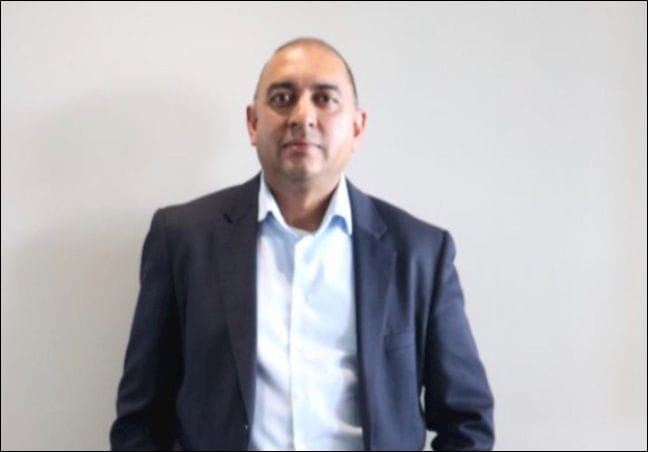
Source: Neeraj Mannie
From the newsletter
As the conflict in Iran persists, driving sharp increases in global fuel prices, Neeraj Mannie, a circular economy expert, argues that these pressures are exposing the fragility of waste collection systems across Africa. He observes that in many African cities, the service is highly fuel-intensive, leaving it vulnerable to even modest price shocks.
Mr Mannie is a global waste and circular economy executive with experience across Africa, the Middle East and international markets. His work includes waste strategy advisory for the FIFA World Cup Qatar 2022 at Lusail Stadium, development of a city-scale waste master plan for Luanda, Angola, and leadership of the hazardous waste business unit at Veolia Southern Africa.
He recommends scaling proven solutions from other markets that are applicable to Africa, such as right-sized fleets, localised transfer infrastructure, and optimised collection models that lower fuel use, reduce costs, and improve reliability across diverse urban environments.
More details
By Neeraj Mannie
Rising fuel prices are about to create a waste crisis that nobody is talking about.
Waste collection is one of the most fuel-intensive municipal services on the planet. Every collection vehicle. Every transfer run. Every landfill trip. All of it runs on fuel. As prices rise, municipalities and private operators face an impossible equation — absorb the cost, reduce collection frequency, or pass it on to generators and clients who are already under financial pressure.
The result? We already know what happens. Reduced collection frequency leads to overflow. Overflow leads to illegal dumping. Illegal dumping leads to environmental degradation, public health crises, and communities living next to waste that nobody is coming to collect. We have seen this story before. Rising costs always hit waste services first because waste is still treated as a grudge spend rather than a critical infrastructure investment.
But here is what the rising fuel price crisis is actually revealing: the centralized collect-and-dispose model is broken. It was always going to break. Fuel prices are just accelerating the inevitable.
What Africa Cannot Afford to Ignore
Nowhere is this more urgent than in Africa. Rapid urbanization, population growth, and chronically underfunded municipal budgets mean that African cities are already operating waste services on the margins. Many municipalities are running ageing, oversized fleets that were never optimized for the density and road conditions of the communities they serve. When fuel costs spike, the buffer simply does not exist.
The informal settlements and peri-urban areas that are already difficult to service will be the first to be abandoned. And the consequences — open burning, waterway contamination, disease vectors — are not abstract. They are immediate and they fall hardest on the most vulnerable. Africa cannot afford to wait for a Western-designed solution to arrive. But that is also the opportunity. Leapfrogging the broken centralized model is entirely possible — if the will and the investment are directed correctly.
The Solutions Already Exist
The good news is that the tools for a more resilient waste collection system are not theoretical. They are being deployed right now in various parts of the world, and they translate directly to the African context.
Right-sizing the fleet.
Not every collection route needs a 10-tonne rear-loader. In dense urban and informal areas, smaller vehicles — including electric three-wheelers already in use for door-to-door collection in cities like Amritsar, India — are proving more effective, more manoeuvrable, and dramatically cheaper to operate. Revisiting vehicle sizing against actual route density and household numbers is one of the fastest wins available to any operator or municipality.
Smarter transfer infrastructure.
More transfer stations and smaller intermediate drop-off points allow lightweight vehicles to operate efficiently over shorter distances, with larger vehicles handling bulk haulage between nodes. This hybrid model reduces fuel consumption across the entire chain and opens the door to community-based collection in areas that larger trucks simply cannot reach.
Optimizing collection frequency.
Collection schedules are often inherited rather than designed. A genuine reassessment of frequency against actual waste generation rates — by area, by season, by household density — can reduce unnecessary trips significantly without compromising service quality.
Closing the loop at the landfill.
Landfills that capture methane gas from decomposing waste are sitting on a fuel source. Where landfill gas harvesting is in place or being developed, gas can be used to power collection vehicles directly — cutting both operating costs and the carbon footprint of the service. This is not a distant concept; it is an extension of infrastructure that already exists or is being built.
Electric vehicles gaining traction.
EV adoption in waste collection is accelerating in Europe and parts of Asia. For Africa, the conversation needs to happen now — not when EV infrastructure has matured elsewhere and the continent is again playing catch-up. Pilot programmes, public-private partnerships, and policy incentives that bring electric collection vehicles into African cities would position municipalities to permanently decouple waste services from fossil fuel volatility.
The Signal Is Clear
The rising fuel price is not just a transport problem. It is a signal that the centralized, diesel-dependent, collect-and-dispose model has reached its structural limit.
Companies and municipalities that understand this shift now will not just reduce their environmental footprint. They will insulate themselves from fuel price volatility permanently and build waste services that are genuinely fit for the communities they serve.
The question for every waste generator, municipality, and policymaker right now — in Africa and globally — is simple: are you going to wait for the crisis to force your hand, or are you going to lead the transition?