- Circular Rising
- Posts
- The waste problem of Africa’s telecom boom
The waste problem of Africa’s telecom boom
Source: Continent Rising
From the newsletter
FNB Connect, the mobile arm of South Africa’s First National Bank, this week announced it is replacing plastic SIM cards with biodegradable alternatives, highlighting an emerging waste dimension of Africa’s digital expansion. As mobile access grows, millions of SIM cards and other telecom components are entering waste streams that fall outside formal recovery systems.
The region’s telecom boom is accelerating, with mobile subscriber penetration in Sub-Saharan Africa projected to reach 50 percent, or 751 million users, by 2030, reshaping the sector’s material use and waste generation.
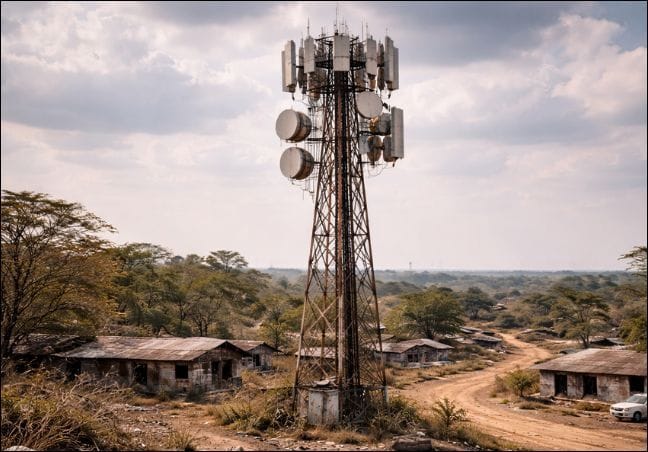
While consumer items such as SIM cards and phones often represent the visible face of telecom waste, they are only a fraction of it.
More details
Africa’s telecom boom is driven by rapid mobile adoption, expanding networks and growing digital access. Operators are investing heavily in 4G and 5G rollouts, with total mobile subscriptions in Sub-Saharan Africa expected to rise from roughly 950 million in 2023 to about 1.2 billion by 2030 as upgraded networks and affordable smartphones spread across the continent. Rising 5G adoption supports more data-intensive services, while a youthful population is fuelling demand. This surge in digital adoption is also enabling new services, with telecoms increasingly integrated with mobile finance and digital commerce, making them a cornerstone of Africa’s digital economy. This expansion has created a largely invisible material footprint.
Although telecom waste is technically part of e-waste, it is often overlooked because network infrastructure rarely features in consumer-centred narratives. Telecom waste includes not only consumer devices such as phones, tablets and SIM cards, but also network equipment including routers, base stations, batteries and ancillary components like cables and connectors. Packaging and promotional materials add further volume. Many of these products combine plastics, precious metals such as gold and copper and hazardous substances, making them difficult to recycle without robust systems.
Fragmented responsibility complicates the management of telecom waste. Manufacturers, network operators, retailers and consumers each play a role, yet no single actor is accountable for the entire lifecycle. Extended Producer Responsibility frameworks are still emerging across the continent, including in Kenya where regulations set to take effect in February require producers to manage the lifecycle of products they place on the market. These frameworks are not yet fully operationalised or tailored to cover all telecom components, leaving small items such as SIM cards and network infrastructure largely outside active regulatory mandates.
Data gaps and visibility issues further hinder effective addressing of the waste. Telecom components are rarely disaggregated in national waste statistics, making it difficult for policymakers to gauge the scale and composition of waste streams. Without accurate measurement and tracking, telecom waste remains largely invisible in policy debates even as device penetration and network equipment proliferate. This lack of visibility not only hampers regulation and limits investment in recycling infrastructure across the continent but also allows environmental and social risks to go largely unaddressed.
As a result, the environmental and social impacts of unmanaged telecom waste are significant. Toxic substances from electronic components can leach into soil and water, while informal recycling practices such as open burning or rudimentary smelting expose workers and communities to harmful pollutants. Countries such as Kenya, where e-waste volumes exceeded 53,000 tonnes in 2024, are experiencing these pressures, with small electronics and telecom devices contributing increasingly to the overall waste burden.
Despite these challenges, there are emerging opportunities to adopt circular economy principles in the telecom sector. Operators are experimenting with take-back and refurbishment schemes. In Kenya, a partnership between Safaricom and Warmtech, a licensed e-waste handler, has processed hundreds of tonnes of obsolete equipment under the telco’s “Zero Waste to Landfill” initiative. Similarly, South Africa's Vodacom is extending device lifetimes through its “Good as New” programme, which refurbishes and resells certified pre-owned devices, helping reduce telco-based electronic waste and retain value. The broader adoption of dematerialised technologies, notably eSIMs as implemented by FNB Connect, could further reduce reliance on physical components.
Our take
Telecommunication waste in Africa is emblematic of the hidden waste streams that are often ignored. If the continent is to achieve circularity, it needs to address all forms of waste, ensuring none is left behind.
Tackling these invisible streams will require coordinated action by regulators, industry players and informal sector actors, supported by policies and infrastructure that address materials sourcing, product longevity and end-of-life reuse.