- Circular Rising
- Posts
- Why waste-to-fuel is gaining ground across Africa
Why waste-to-fuel is gaining ground across Africa
Dear subscriber,
Africa has traditionally prioritised waste-to-energy plants, but a new kid on the block is shaking things up, reminding us that Africa’s waste story is far from predictable.
Mercy Maina – Editor
 | Kenya-based sanitation company Sanivation has secured $3.8 million from the Private Infrastructure Development Group (PIDG) to expand its waste-to-fuel project, converting human waste and organic residues into solid fuel briquettes. Waste-to-fuel is gaining ground across Africa as cities grow and industries seek reliable, affordable fuel alternatives. |
Waste-to-fuel converts various types of waste, such as municipal solid waste, agricultural residues, plastics, and even human waste, into usable fuels in solid, liquid or gaseous form.
Unlike grid-dependent and heavily regulated conventional waste-to-energy, waste-to-fuel generates tradable fuels that industries can use directly, allowing adoption and scaling across the continent.
Our take: Waste-to-fuel could emerge as an alternative, well suited to Africa’s realities… Read more (2 min)
 | While poor waste management is framed as a behavioural problem, its true drivers lie in broken systems, says Valentine Onditi. He says in many African cities, uncollected trash and practices like burning plastics are symptoms of underfunded infrastructure, fragmented governance and urban planning that has not kept pace with rapid growth. |
Mr Onditi is a circular economy advocate and Head of Marketing at Jirani Recyclers Kenya, a waste management company that transforms polythene bags into meaningful products.
He argues that solving Africa’s waste crisis requires more than awareness campaigns or downstream recycling, calling instead for systemic change that tackles the root structural challenges.
Find the full conversation here (2 min)
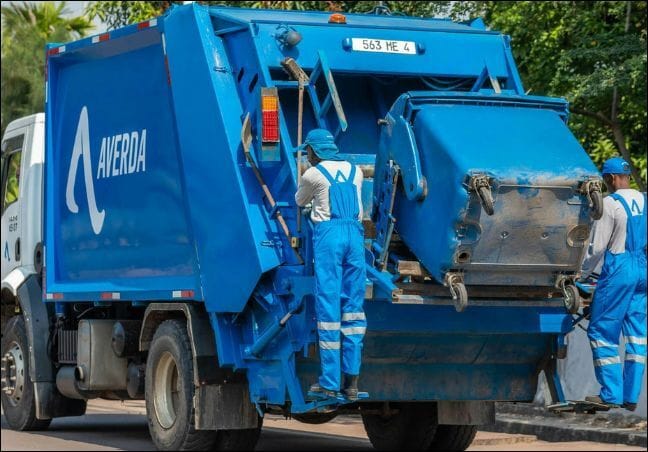 | Pan-African waste management company Averda is rapidly expanding its client-facing teams, signalling a strategic pivot from purely operational growth. LinkedIn data shows customer success and support roles grew by 26% over the past year, highlighting the company’s emphasis on service quality and client engagement. |
This emphasis is reinforced by growth in information technology and business development roles, which increased by 13% and 10% respectively, an expansion that enables Averda to combine frontline service with digital tools and sales capacity.
Stability in these functions further supports this approach, with information technology and business development recording the lowest attrition rates at 2% and 5% respectively.
Our take: Averda is signalling a shift from a volume-driven waste collector toward a service-led operating model, where client engagement is key…Read more (2 min)
___________________


Source: PIDG
Sanivation Ltd.’s innovative waste-to-value project in Nakuru, Kenya
Events
🗓️ Be at the Conference on Composting Techniques (Jan 24)
🗓️ Register for Africa’s Green Economy Summit in South Africa (February 24)
🗓️ Network at the Conference on Packaging & Circular Economy (March 9)
🗓️ Attend the Waste Management Conference in Zimbabwe (March 18)
Jobs
🧑💼 Consult on circular economy at ITU (Africa)
🧑💼 Lead commercial strategy at Rent-A-Drum (Namibia)
🧑💼 Maintain hygienic environment at Partners in Health (Sierra Leone)
🧑💼 Be the next Regional Technical Advisor for West Africa at WaterAid (Senegal)
🧑💼 Serve as a Senior Safety Engineer at SUEZ (Egypt)
Various
📜 Style House Files publishes report on textile waste flows in Nigeria
🪮 Feature: Young Tanzanian entrepreneur recycles hair into fertilizer
💰 Ghana’s Kumasi seeks €6m to prevent potential waste management crisis
📚 Report: The impact of solid waste on human health
🚽 Ethiopia's Somali region launches $12.5 million sanitation project in Dhagax-buur
✍️ Sahara Group, Plan International sign MoU to advance recycling in Nigeria
⚠️ SA’s circular economy will fail without integrating informal waste pickers
Seen on LinkedIn
Michael Adebanjo, an environmental engineer at Waterways Limited, says, “Every ton of organic waste sent to a landfill is a lost opportunity for biogas energy generation and soil fertilization. Every kilogram of plastic buried in the ground is lost infrastructure material. By disposing of these items, we are essentially throwing money into the ground and then paying the price in pollution cleanup later. Waste mismanagement is not just an environmental crisis; it is economic bleeding.”